 EP 02
EP 02
Free Spans in Subsea Pipelines
What a free span is, what causes one, why vortex-induced vibration matters, and how spans are assessed, inspected and corrected.
[[release date]]
Watch on YouTube →
LEARN·CONNECT·GROW
Technical explainers built from our own animated diagrams — and a hub taking shape around them for the engineers, crews and companies who work below the waterline.
Technical explainers for the engineers, crews and companies who work below the waterline.
Scroll to descend · 0 m to −3,000 m
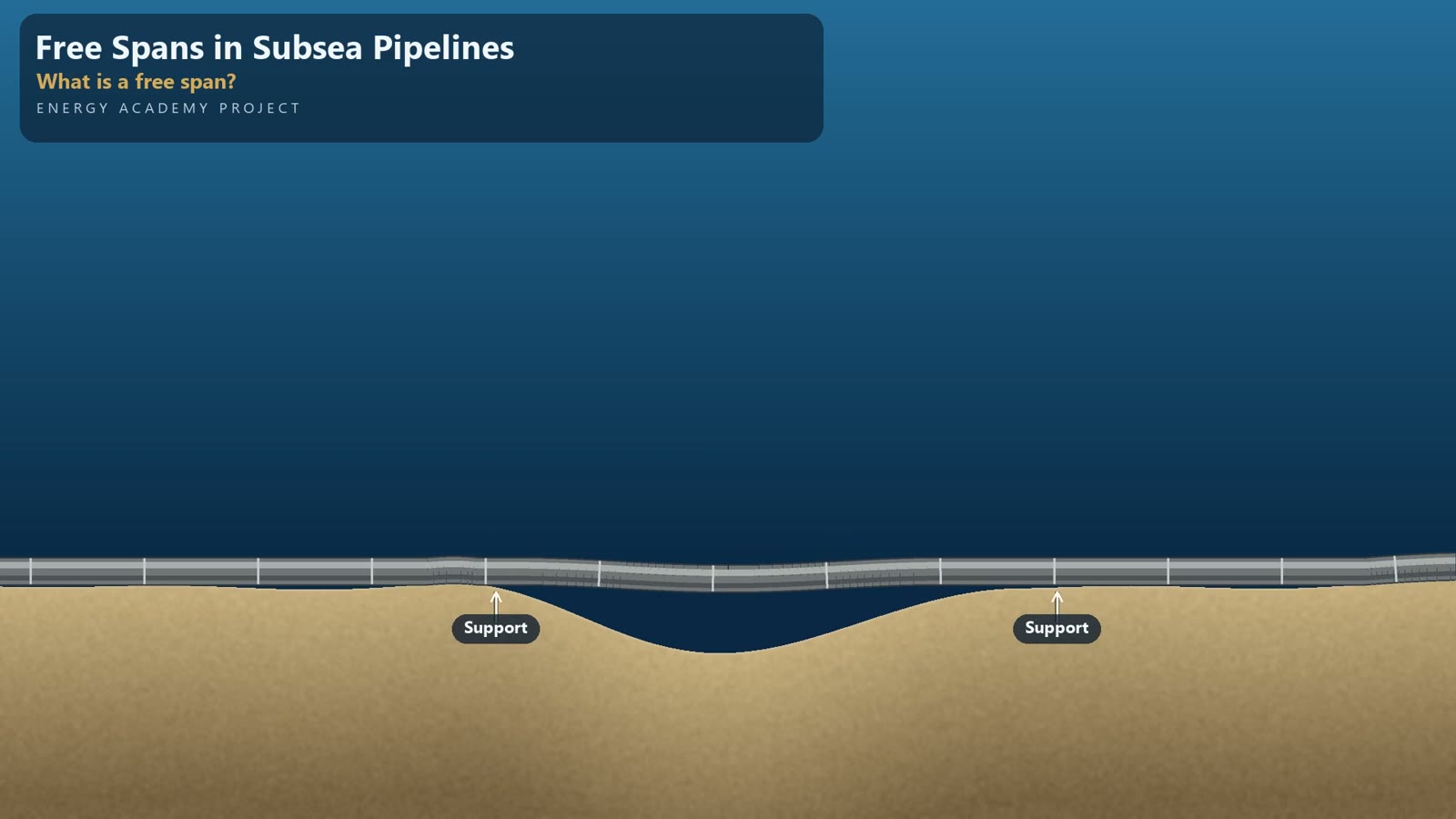
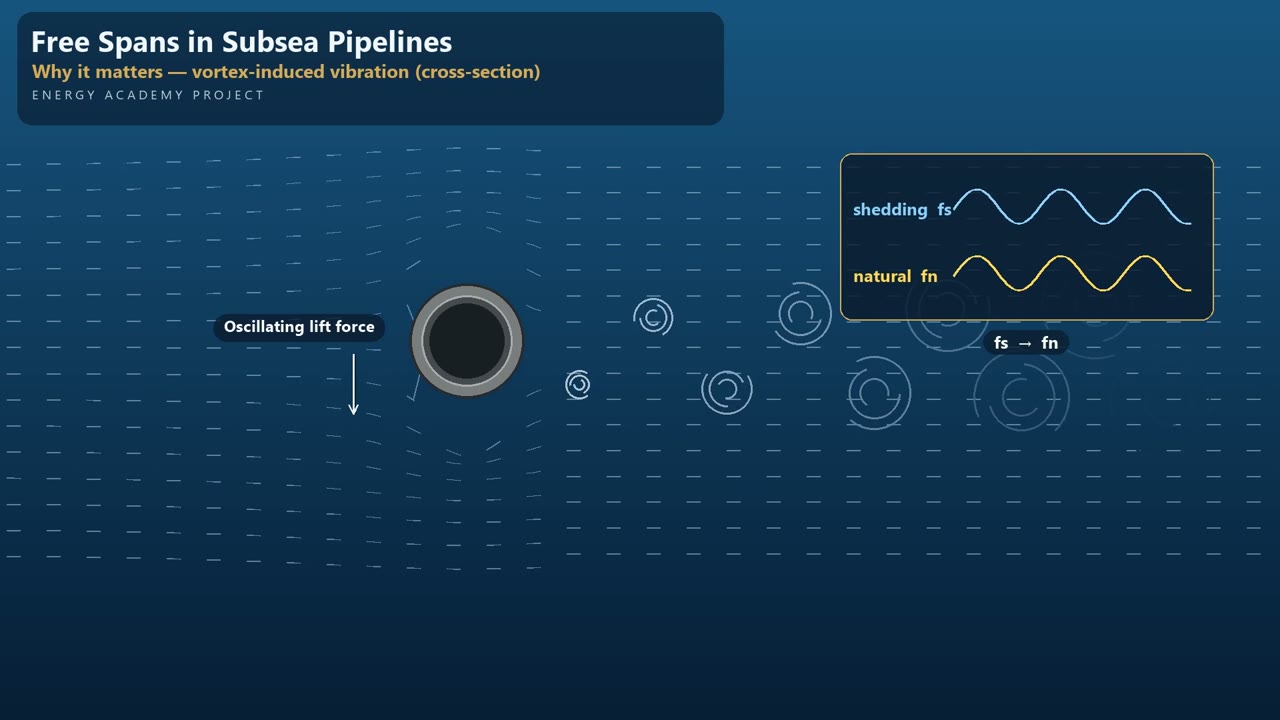
Scour, sand waves, an uneven bottom or a crossing: the support disappears and a length of pipe is left hanging. Then the current starts shedding vortices, the span vibrates at its own natural frequency, and a gap becomes a fatigue problem.
EP 02
What a free span is, what causes one, why vortex-induced vibration matters, and how spans are assessed, inspected and corrected.
Energy Academy Project starts as a technical channel. It is being built into a hub where subsea knowledge, the people who hold it and the companies that need it meet — one phase at a time, nothing promised before it exists.
Explainers on YouTube and LinkedIn, sources credited in every episode.
Structured learning built from the topics the audience asks for most.
A curated place to find subsea suppliers, consultants and talent.
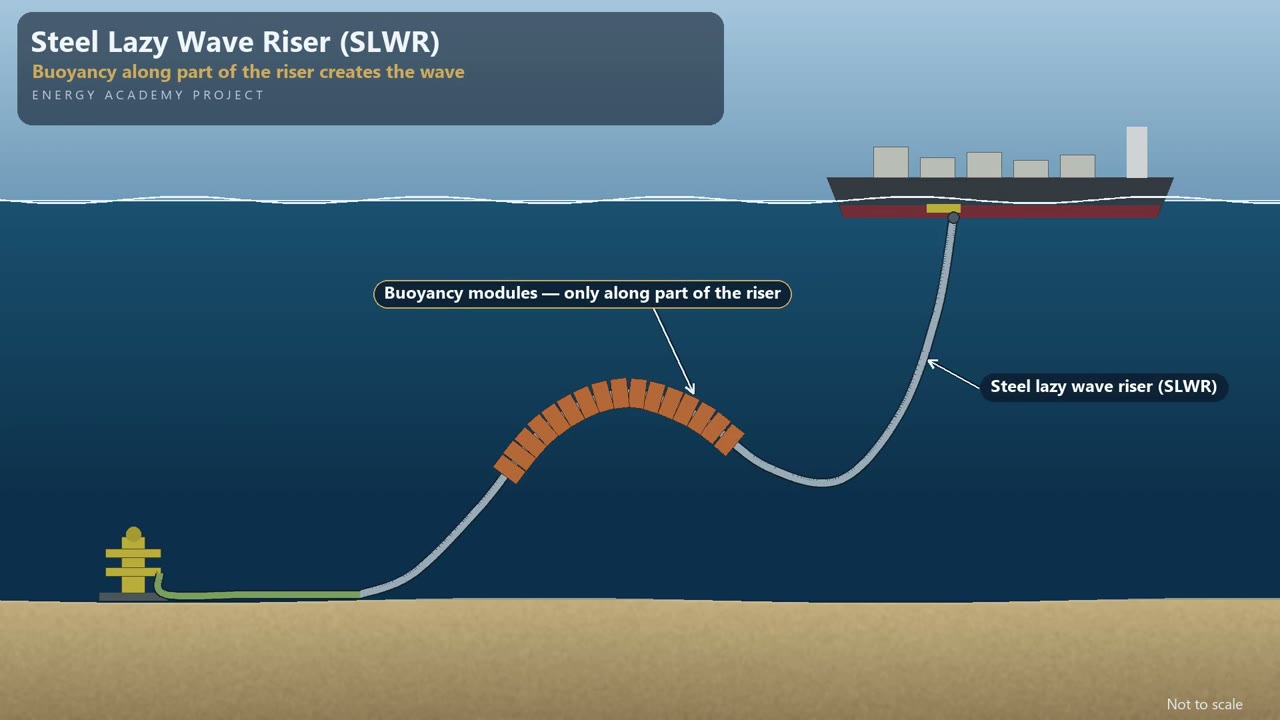
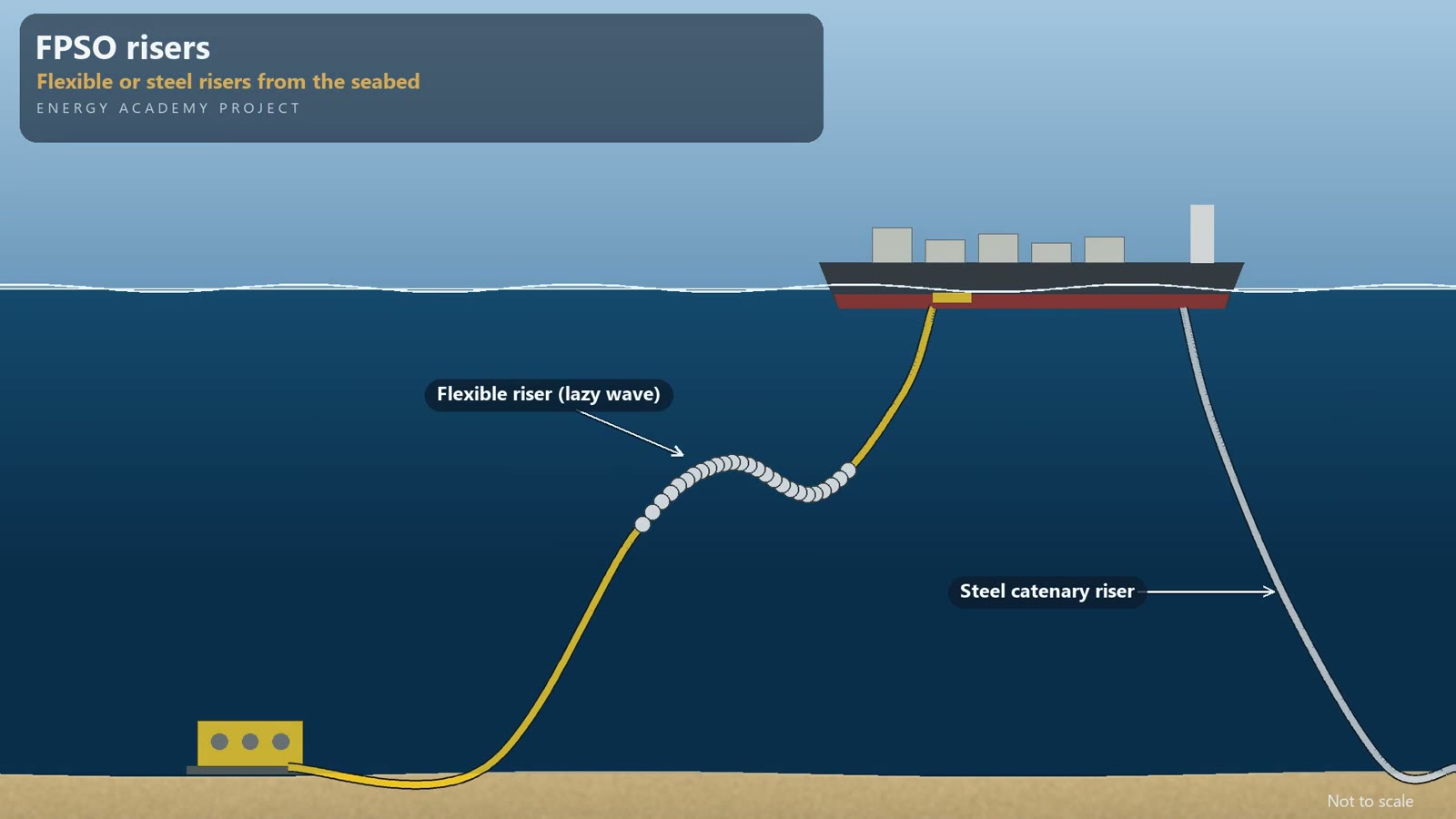
Everything the field produces, and everything that controls it, travels this stretch of water. The riser on your right follows the catenary equation; the umbilical passing the camera carries the hydraulic, electrical and chemical lines that keep the wells alive.
EP 01
Subsea Umbilicals, Risers and Flowlines: how a field connects to the host facility, and the main riser configurations (SCR, SLWR and FSHR).
 EP 03
EP 03
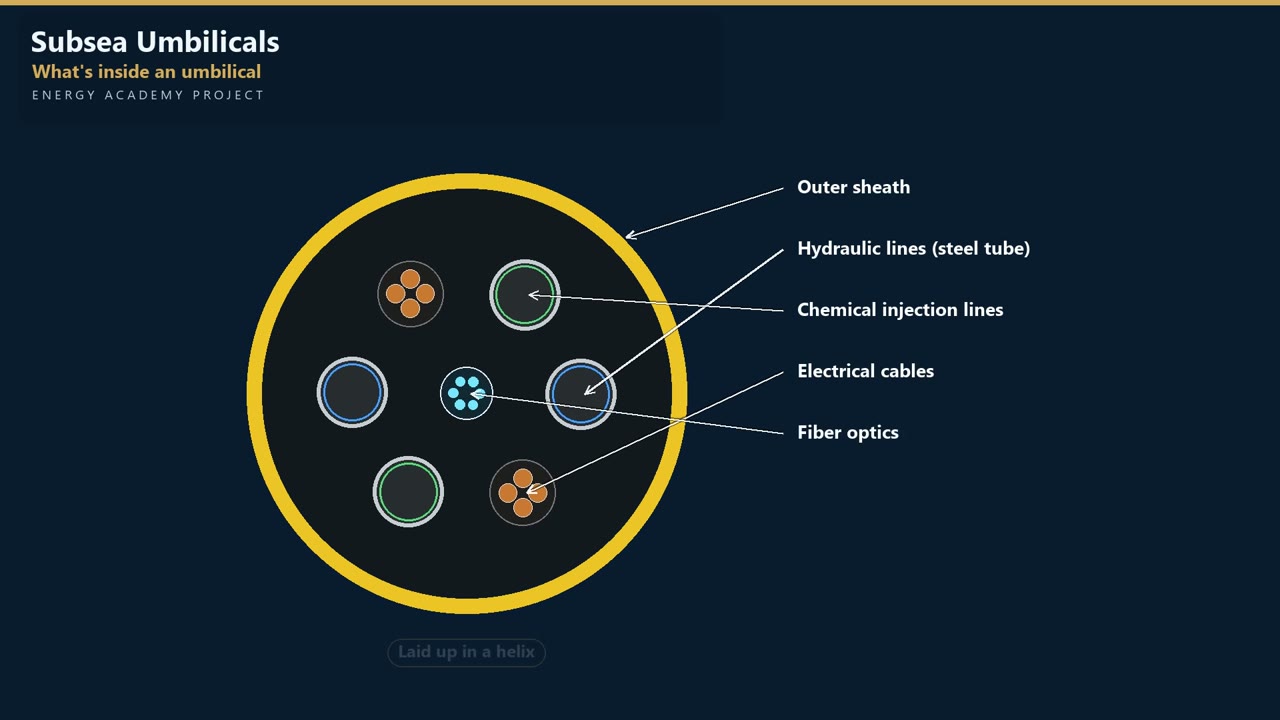
What an umbilical carries, what is inside it, the main types and accessories, and how it is installed from a pipe laying support vessel.
At this depth a fixed jacket is out of the question. The facility floats, and the lines running past you carry it back to suction pile anchors on the bottom. Which concept wins — semi-submersible, TLP, spar or FPSO — comes down to water depth, sea state, storage and the riser system it has to support.
EP 04
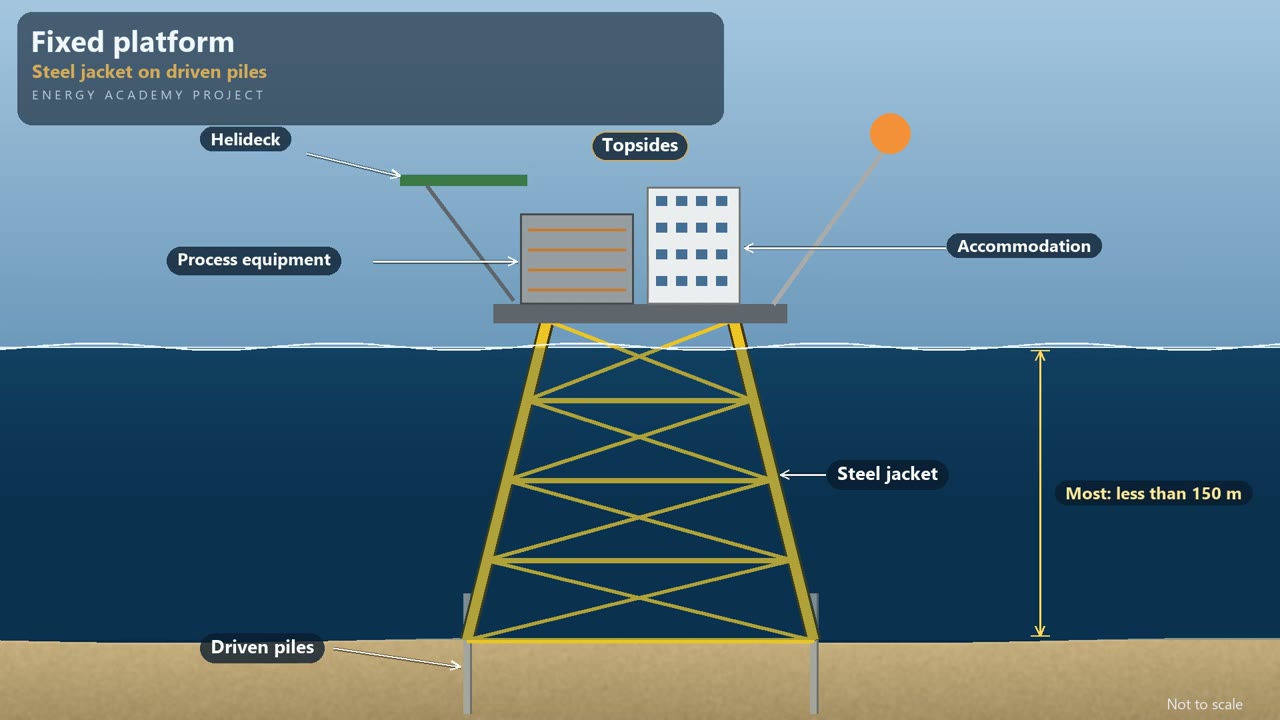
Fixed, jack-up, semi-submersible, TLP, spar and FPSO: how each one stays in place, and the criteria that point to one or another.
−3,000 m · Seabed
We are planning structured courses that go deeper than the episodes. Tell us what you need and you will be the first to know when enrolment opens.
Preview only — this form is not connected.
A curated directory of subsea suppliers, service companies and consultants, plus training for teams. Register your interest now and we will contact you before launch.
A company profile by category and region: engineering, installation, inspection, fabrication, consulting and training.
Onboarding and fundamentals for new hires and cross-discipline teams.
Connecting companies with the right supplier or specialist, under transparent rules.
Energy Academy Project is a subsea and offshore education initiative run by working practitioners. Our audience works in the industry and spots a technical mistake immediately, so accuracy comes first.
Behind it are inspection, welding and installation professionals with decades of field experience on offshore and EPCI projects. We keep them unnamed while current employment ties stand — the work is signed by the project, not by individuals.
Energy education today. A stronger tomorrow.
AI-generated footage
Questions, topic suggestions, partnerships or corrections. We read everything.
[[contact email, e.g. hello@…]]